28 Jun-3 Jul 2026
6 Days
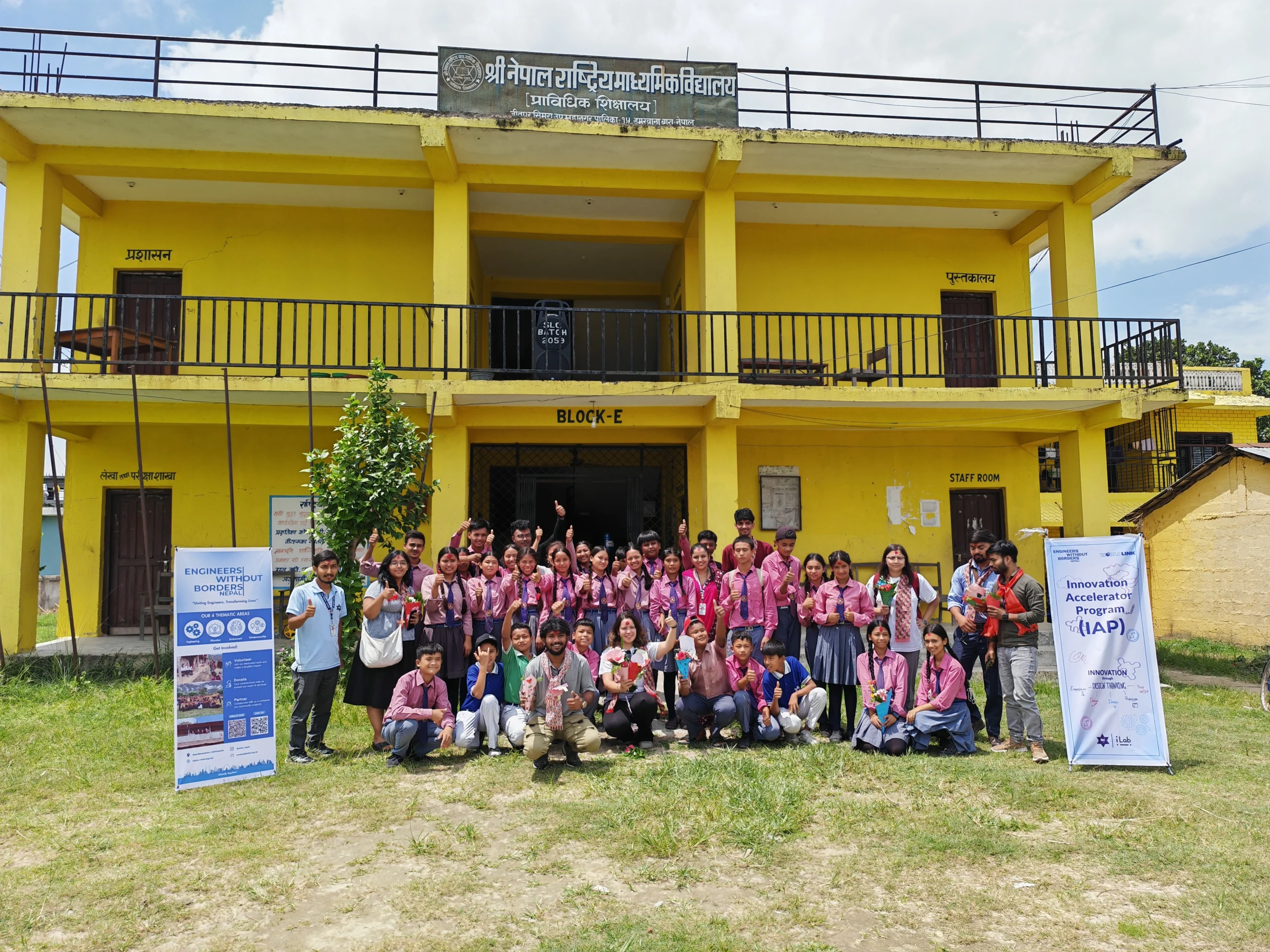
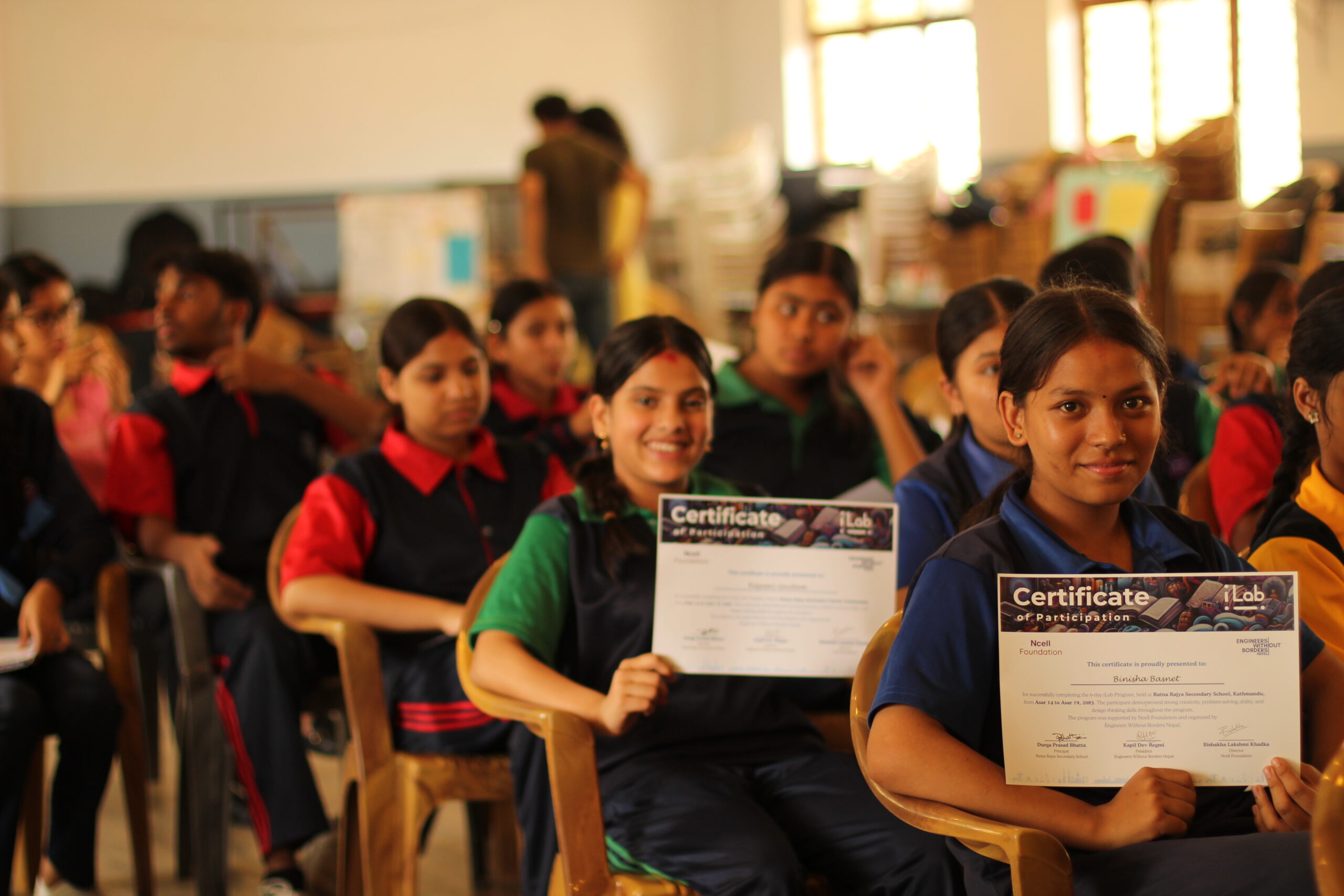
The i-Lab was implemented at Ratna Rajya Secondary School, Mid-Baneshwor, Kathmandu, addressing gaps in learning quality, practical skill-building, and innovation culture in Nepal’s education system through a school-based makerspace and a six-day Innovation Accelerator Program (IAP). Over six days, 30 students formed 5 student teams and worked under the thematic areas of Agriculture, Art, Culture and Tourism, Education, Environment, and Health.
The i-Lab (Innovation Lab) model shifts learning from rote memorization to hands-on making, and from copying to creating. By establishing a school-based makerspace, delivering a structured Innovation Accelerator Program grounded in design thinking and applied engineering, and providing post-program teacher support, the i-Lab embeds continuous innovation cycles within everyday school practice.
The project aligns closely with the School Education Sector Plan (2022–2032) by operationalizing its priorities at the school level, specifically contributing to improved classroom practice, expanded experiential and project-based learning, and strengthened inclusion and equity.
Maker-space Setup
The i-Lab makerspace was established within the school using available space and adaptable infrastructure. It was equipped with essential tools, materials, and low-cost resources to support hands-on experimentation, collaboration, and safe prototyping.
Student Enterprise Groups
Each student team developed solutions based on local challenges. During the six-day Innovation Accelerator Program, 5 student teams worked under the thematic areas of Agriculture, Art, Culture and Tourism, Education, Environment, and Health.
Agriculture1. Nepali Marmasala
Main problem
Despite Nepal’s rich base of native herbs and spices, the market still leans heavily on imported spice blends, and locally grown spices are mostly sold as low-value raw produce. This limits income opportunities for farmers and leaves consumers with few options for spice blends built around distinctly Nepali flavors.
Solution
The team created Timur Tadka and Akabare Special, two spice blends made from locally sourced Nepali spices, packaged in a custom 3D-printed reusable shaker for everyday cooking and snacking.
Key features
Art, Culture and Tourism2. Nepa-Art
Main problem
Nepal’s artistic and cultural heritage is often reduced to simplified, inaccurate illustrations in school textbooks, giving students little chance to appreciate the symbolism and craftsmanship behind traditional Nepali art such as mandalas.
Solution
The team designed a set of bookmarks, puzzles, and stickers featuring authentic Nepali mandala artwork, each carrying a QR code linking to background on the artwork’s history and cultural meaning.
Key features
Education3. Hexaspark
Main problem
Classroom teaching in many schools remains lecture-based with limited use of interactive tools, leaving history lessons about Kathmandu’s heritage feeling distant and reducing students’ curiosity and retention.
Solution
The team designed the Explore Kathmandu Board Game, which uses challenges, quizzes, and exploration-based gameplay to teach players about the city’s monuments, history, and lesser-known cultural facts.
Key features
Environment4. RE:JEANS
Main problem
Fast-changing fashion trends generate large amounts of discarded denim, much of which is still usable but ends up in landfills, while few people are aware of how old clothing can be creatively reused.
Solution
The team repurposes old, unused denim jeans into stylish handmade keyrings, giving discarded fabric a second life as an everyday accessory.
Key features
Health5. Comfort Cycle
Main problem
Managing menstruation at school is difficult in a large school of over 2,500 students, where washrooms and the health room are frequently overcrowded. Students often have nowhere to hang their uniforms or belongings during pad changes, and limited sanitation facilities make maintaining hygiene difficult.
Solution
The team designed a compact Emergency Period Kit containing sanitary pads, panty liners, and wipes, along with a foldable hook for hanging uniforms while changing and a discreet indicator band to signal when support is needed.
Key features
Expected Outcome
Picture Gallery
EWB Nepal comprises a diverse community of volunteers, members, supporters, professionals, and academics. By making a contribution, you are supporting a global network of people passionate about using their engineering skills to solve humanitarian challenges.