September 29, 2026

Let’s do an experiment together quickly.
First, Google children from a Western country: “American children,” “French children,” something like that. Now do the same for a place we generally view as developing: “Nepali children,” “Kenyan children,” and so on.
Odds are, the results look a little different.
You may see fewer smiles, dirtier clothing, fewer toys or objects in their hands, more rural environments, and images that seem deliberately selected to communicate hardship. Of course, those images are real. Children living in poverty exist. Rural communities exist. But they are also only one version of life in those countries.
It has now been about six months since I first landed in Kathmandu, Nepal. While I had visited other developing countries before, this was my first real experience living and working in one. It has definitely been different, but perhaps not always in the ways I expected.
One of the most interesting parts has actually been the reactions I received from Americans when I told them I was moving here. Those who had lived abroad or spent meaningful time in places like Nepal, India, or Africa generally told me I would have an incredible experience. Those who had never done something similar had slightly different questions. One person genuinely wondered whether Nepal would have a bank where I could keep my money.
I want to acknowledge that a lot of these reactions came from a place of genuine concern for my safety and wellbeing. Nepal is far away from the United States, and most Americans know relatively little about everyday life here. The news that reaches the West from Nepal is also rarely about someone going to work, having dinner with friends, or complaining about traffic. It is usually about an earthquake, political instability, a plane crash, flooding, or some other crisis.
Those events are real. The earthquake did happen. The Gen Z protests really did occur. The water delivered to many homes in Nepal is generally not considered safe to drink directly, largely because of bacteria and other contaminants.
But everyday life usually exists somewhere between these headlines.
For example, while I cannot drink directly from my tap, I can buy a reusable 20-liter jug of purified drinking water for around 50 NPR, roughly 33 US cents. It is slightly inconvenient, but hardly the daily humanitarian crisis someone might imagine after hearing the phrase “unsafe drinking water.”
This is something I have found myself noticing repeatedly since moving here: the difference between a problem existing and that problem defining a place.
Before coming to Nepal, I studied urban environments in the United States. Many of the issues we spent time discussing are simply less prevalent in Kathmandu.
One topic I studied frequently was food deserts: neighborhoods where residents have limited access to affordable, fresh, nutritious food. It is an important problem in the United States, and cities have spent years experimenting with public markets, incentives for grocery stores, community groceries, and other interventions.
Kathmandu has plenty of urban problems of its own, but access to fresh produce is rarely one I hear discussed. In many neighborhoods, it is genuinely difficult to walk more than 100 meters without finding someone selling fresh fruits or vegetables.
That does not mean Kathmandu is better than New York, or Nepal is somehow more “developed” because vegetables are easier to find. It simply illustrates something I have become increasingly conscious of: societies have different problems, different strengths, and different ways of organizing everyday life.
The “problems” we perceive from the West are certainly real. But I have come to wonder whether we sometimes exaggerate their place in everyday life. The United States, Europe, Australia, and other wealthy parts of the world deal with their own enormous socioeconomic challenges. Homelessness, food insecurity, unaffordable housing, inadequate public transportation, unsafe drinking water, isolation, poor healthcare access, and failing infrastructure are hardly foreign concepts in wealthy countries.
Why, then, do we so often look at those problems critically when they occur at home, but treat them as defining characteristics when they occur somewhere else?
I want to preface this by saying I am not naive enough to believe racism has somehow disappeared in the West. Obviously, it has not.
However, there have been enormous social movements asking people, particularly white people, to think more critically about how we speak about Black, Asian, Latino, Indigenous, and other communities. The language we use matters. Stereotypes matter. The assumptions we make about entire groups of people matter. Yet I am sometimes surprised by how easily many of those same standards disappear when the conversation shifts toward South Asia.
Whether it is because of my algorithm, my IP address being in Nepal, or simply the content I now pay attention to, I see a lot of videos from travelers visiting India and other parts of South Asia.
They generally seem to fall into two categories:
Regardless of the genre, the comments often look remarkably similar:
“I would only go to India if I wanted to die of explosive diarrhea.”
“Probably because they have the worst and least functional infrastructure on Earth. Why would anyone want to subject themselves to that?”
“Great place alright, to be assaulted and harassed that is.”
These are not criticisms of a particular road, sanitation system, government policy, or public safety issue. They are sweeping judgments about hundreds of millions, sometimes more than a billion, people. And that distinction matters.
It was only recently that the United States dealt with its own outbreak of an intestinal parasite. Flint, Michigan continues to live with the legacy of lead-contaminated drinking water more than a decade after its water crisis began. Communities across the country are currently debating the water and energy demands associated with the rapid expansion of AI data centers.
Yet we rarely see those examples used as evidence that the United States itself is disgusting, uncivilized, or fundamentally unsafe.
Sexual violence provides another uncomfortable example. Reported rape statistics vary enormously between countries and are notoriously difficult to compare because reporting practices, definitions, law enforcement systems, stigma, and willingness to report are all different. Still, the perception that sexual violence is somehow uniquely characteristic of India or South Asia is deeply embedded in a lot of Western discussion.
India has 2.2 reported sexual assaults per 100,000 people. Nepal has 4.2. Seems like a lot?
The United States has 41.4. England has 117.3.
Again, the issue is not that these problems do not exist. They do. The issue is what we allow those problems to represent.
When something terrible happens in an American city, we usually see it as a problem that America needs to solve. When something terrible happens in India, Nepal, or another developing country, people are much quicker to treat it as evidence of what that country is.
We grant ourselves complexity. Other places are often reduced to their worst statistics.
This is one of the ways prejudice survives. Most people do not sit around consciously deciding that they dislike a billion people they have never met. Perceptions accumulate instead. A news story here. A travel video there. A joke about food poisoning. A photo of a slum. A warning about scams. Eventually, an entire place becomes associated with danger, dirtiness, poverty, or dysfunction. Then we begin interpreting everything through that lens.
You often hear similar discussions about immigrants being unable or unwilling to “integrate” into Western societies. Of course, cultural differences are real. Living somewhere with unfamiliar languages, customs, religions, foods, social expectations, and family structures can create genuine challenges; but integration also works both ways.
It becomes much harder to ask someone to feel welcome in a society while simultaneously speaking about the place they came from as though it is backwards, dangerous, dirty, or somehow inherently lesser.
Living in Nepal has also made me think differently about what we mean when we talk about “development.”
I think it is worth asking where our personal visions of utopia actually come from. For my Master’s thesis, I envisioned a San Francisco without cars as a kind of urban utopia. I still stand by much of that vision. Walkable neighborhoods, strong public transit, safer streets, and cities designed around people rather than private vehicles are all things I continue to believe in.
But my time in Nepal has made me ask more questions about how universally those ideas should be applied. Kathmandu’s utopia is not San Francisco’s. That sounds obvious when written down, but I am not sure we always act as though it is.
From the West, it can be very easy to look at Nepal’s infrastructure and declare certain things unacceptable. Some of them probably are. People here work tirelessly to improve roads, sanitation, drinking water, electricity, housing, public transportation, and countless other systems.
There is no reason to romanticize poor infrastructure simply because it exists in a developing country. However, there is also a difference between saying something should improve and assuming we already know what the final result should look like.
Western countries have spent decades building infrastructure around their own histories, economies, geographies, political structures, and cultural priorities. Those systems are not automatically the universal destination toward which every other country should be moving.
In development work, this distinction can become especially important. There are some goals that I think we can reasonably describe as universal. People should have access to safe water. Buildings should not collapse. Children should have access to sanitation. People should be able to move around their communities safely. But a universal standard does not necessarily require a universal solution.
Safe drinking water in rural Nepal does not need to be delivered through the exact same infrastructure used in suburban California. Transportation in Kathmandu does not need to eventually resemble transportation in Copenhagen. A village does not need to become a city in order to have “developed.”
Development should expand choices and opportunity, not simply make places look more Western. This has been one of the most valuable lessons for me personally while working in Nepal.
Engineers are trained to solve problems. That mindset is incredibly useful, but it also comes with a danger: if we arrive already convinced that we understand the problem, it becomes very easy to start designing before we have really listened.
Sometimes the most technically impressive solution is not the solution a community needs. Sometimes something that looks inefficient to an outsider works remarkably well because it fits the economic or social reality of that place. Sometimes informal systems are filling gaps that formal systems have failed to address. And sometimes the person who has lived beside a problem for 30 years understands something about it that no engineer, consultant, donor, or researcher could possibly discover during a two-week visit.
None of this means expertise does not matter. It does. It means expertise should give communities more options rather than taking choices away from them. Perhaps that is also where we need to reconsider what development itself means.
If every country became richer, built wider roads, constructed taller buildings, expanded formal retail, and adopted the same infrastructure systems as wealthy Western nations, would we necessarily have created a better world? Maybe, but probably not in every case.
The longer I live in Nepal, the less interested I become in asking which country has things “better” or “worse.” Every place has problems. Some are far more serious than others. Some require enormous investment and immediate attention. Pretending otherwise would be equally misguided.
Problems deserve context, and they should not become identities for countries. When we look at another country and see only its poverty, its sanitation problems, its political instability, or its worst headlines, we are not really seeing that country at all.
We are seeing the version of it we have been taught to expect. Maybe development starts with something much simpler than a new road, water system, or building. Maybe it starts by asking people what kind of place they actually want to live in and accepting that their answer might look very different from ours.
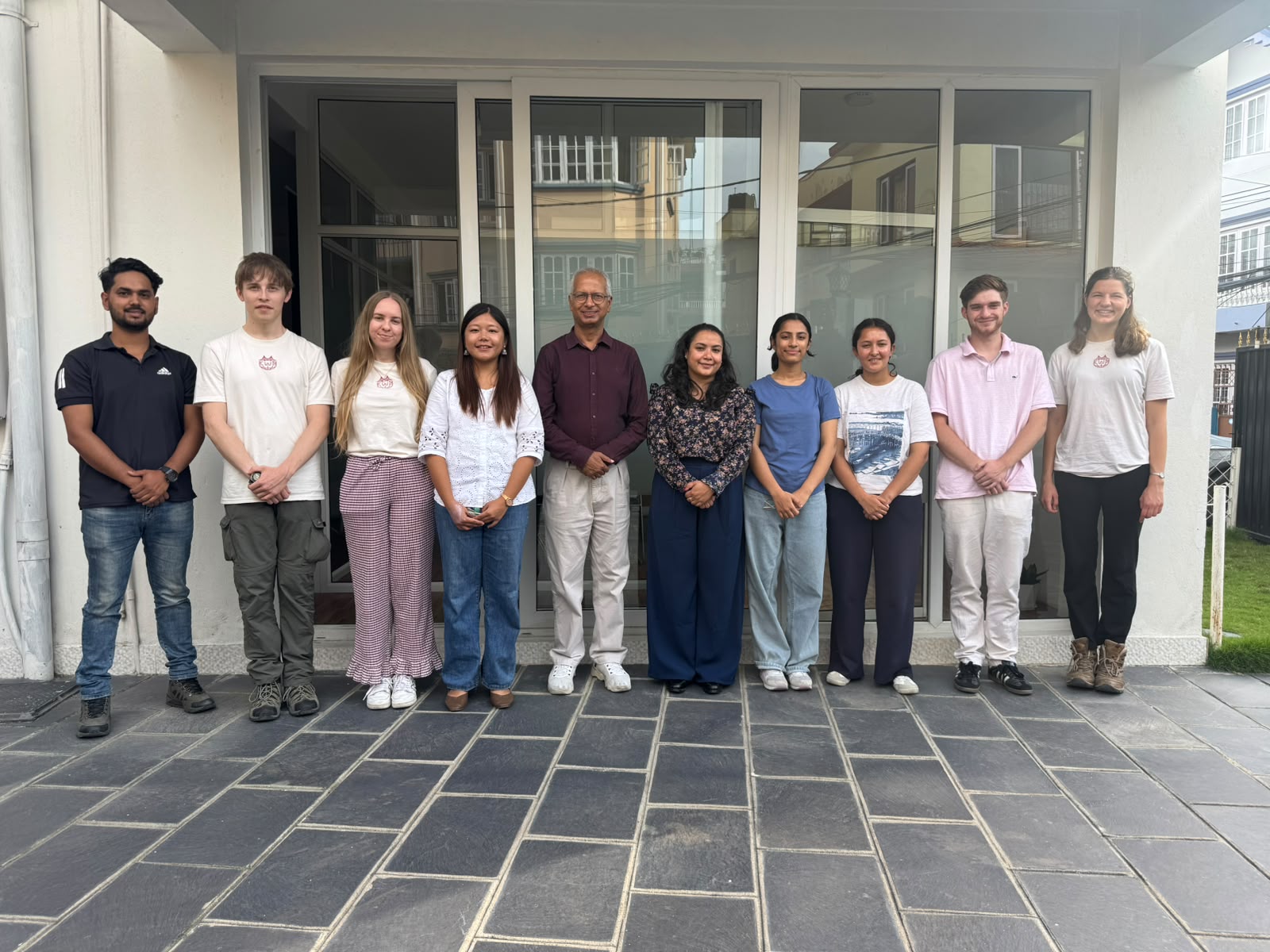
On September 22, three members of Engineers Without Borders (EWB) KIT, Germany, visited the EWB…
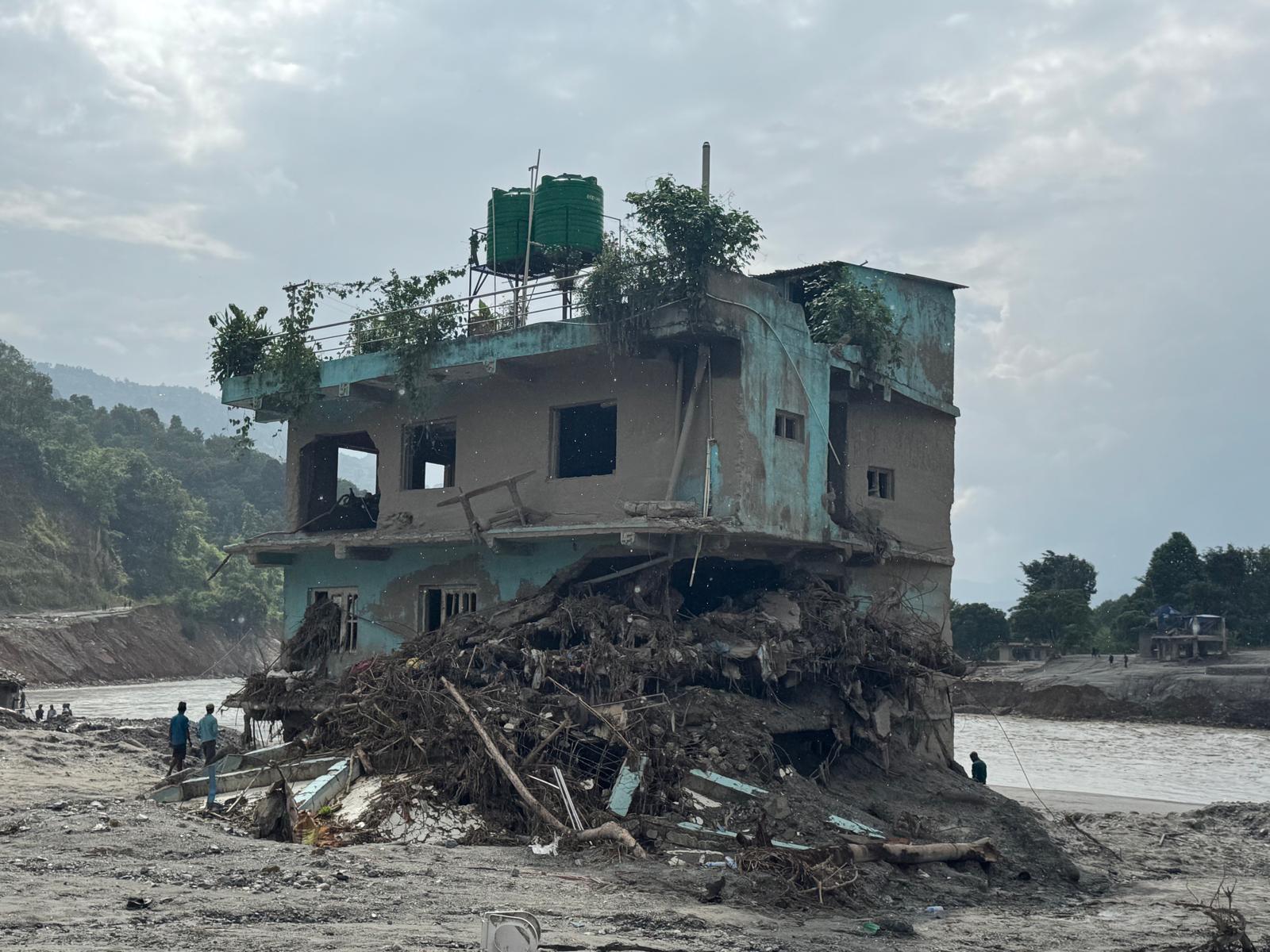
It is one thing to read about a flood. It is another to stand in…
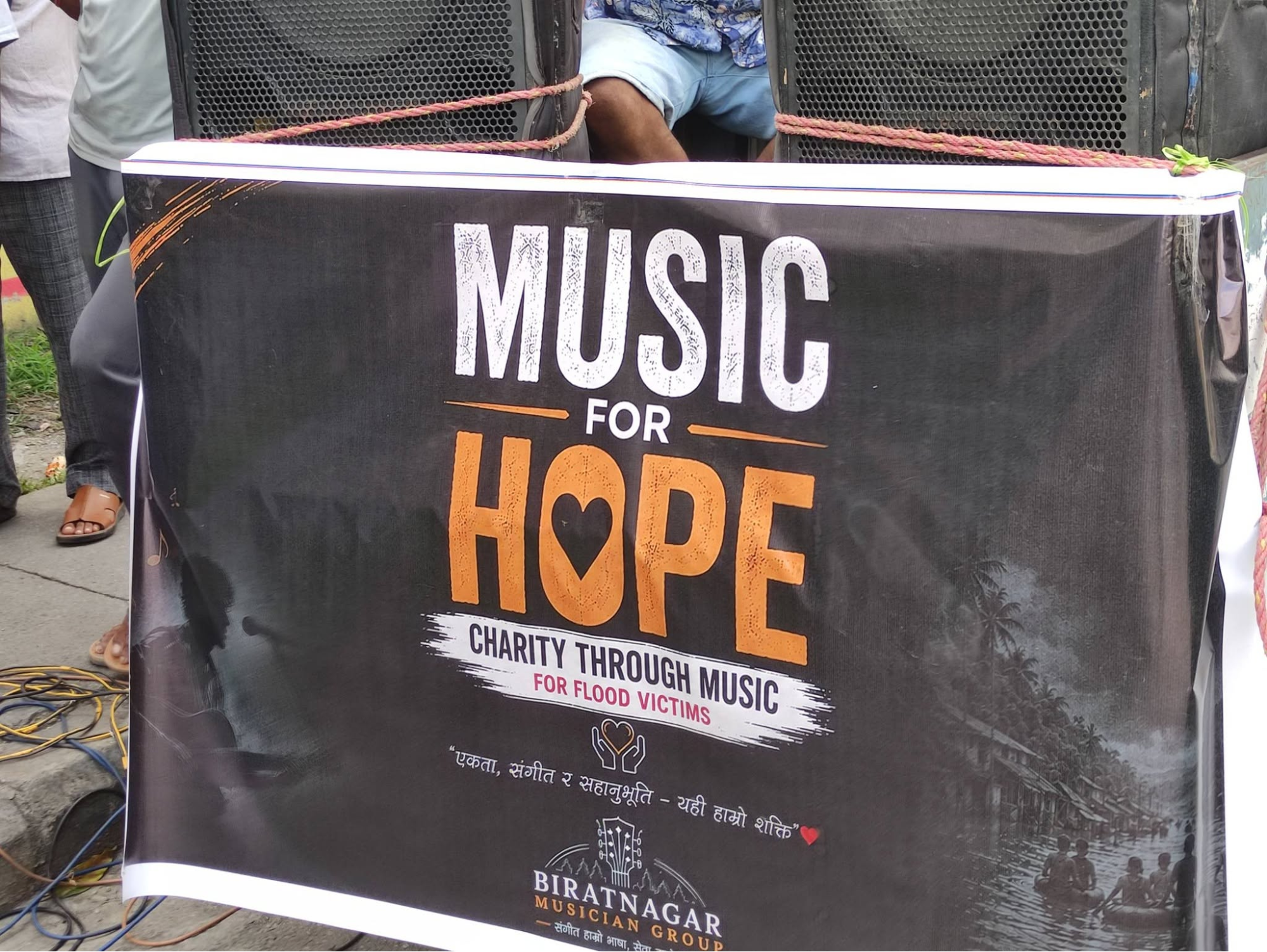
Biratnagar | 2 September 2026 When a disaster happens far from home, there are only…